

A Zone 6 Gardiner's Companion
The homework that saves you from beautiful mistakes.
Light is non-negotiable. A shade plant in full sun will look miserable within days. A sun-lover in deep shade will struggle quietly and never thrive. Before anything else, observe your garden at different times of day and honestly assess what you've got.
Step One:
Know Your Light
Full sun
6+ hours of direct sun daily
Good candidates: Echinacea, Salvia, Lavender, Rudbeckia, ornamental grasses, roses
Part sun / part shade
3–6 hours of sun, ideally in the morning
Good candidates: Astilbe, Geranium, Heuchera, Veronicastrum
Full shade
Less than 3 hours of direct sun
Good candidates: Hosta, Ferns, Hellebores, Ligularia, Brunnera
Durham Region tipMany older GTA gardens have large established trees — maples, lindens, magnolias — that create "dry shade": low light and soil that tree roots are competing for moisture in. This is one of the trickiest conditions. Embrace it with Hostas, Epimedium, and dry-shade tolerant ferns rather than fighting it with sun-lovers. One of my favourites is Abiqua elephant ear hosta. It's a showstopper under my birch.
Know your soil
Heavy clay
Common across much of the GTA. Holds water, gets compacted, but is genuinely fertile. Amend with compost — not sand — and choose plants that tolerate clay (Astilbe, Joe Pye Weed, Iris).
Sandy / Amended
Often found in newer builds or heavily worked gardens. Drains fast, warms quickly. Perfect for Mediterranean plants (Lavender, Salvia, Nepeta, Sedum).
Rich Loam
The dream. If you've inherited this or built it with years of compost, nearly anything will grow. Focus on plant placement and design rather than soil correction.
The best advice for any GTA garden: add a thick layer of compost every spring and let the earthworms do the rest. Over time, even difficult clay becomes workable and rich.
Colour theory — the short version
You don't need to study art history. You just need three approaches and the confidence to pick one.
Analogous — Colours that live next to each other
Pinks, roses, and warm whites with touches of apricot. Feels romantic and cohesive — perfect for an English cottage style. Easy to pull off, deeply satisfying.

Tonal — One colour, many shades
An all-green foliage garden with white flowers. Sophisticated, calming, and works beautifully in shade. Texture and form do the heavy lifting.

Contrast — Opposites on the colour wheel
Purple/lavender with gold and amber — like Salvia paired with Rudbeckia. High impact, especially in late summer. Use white as a mediator between strong contrasts.

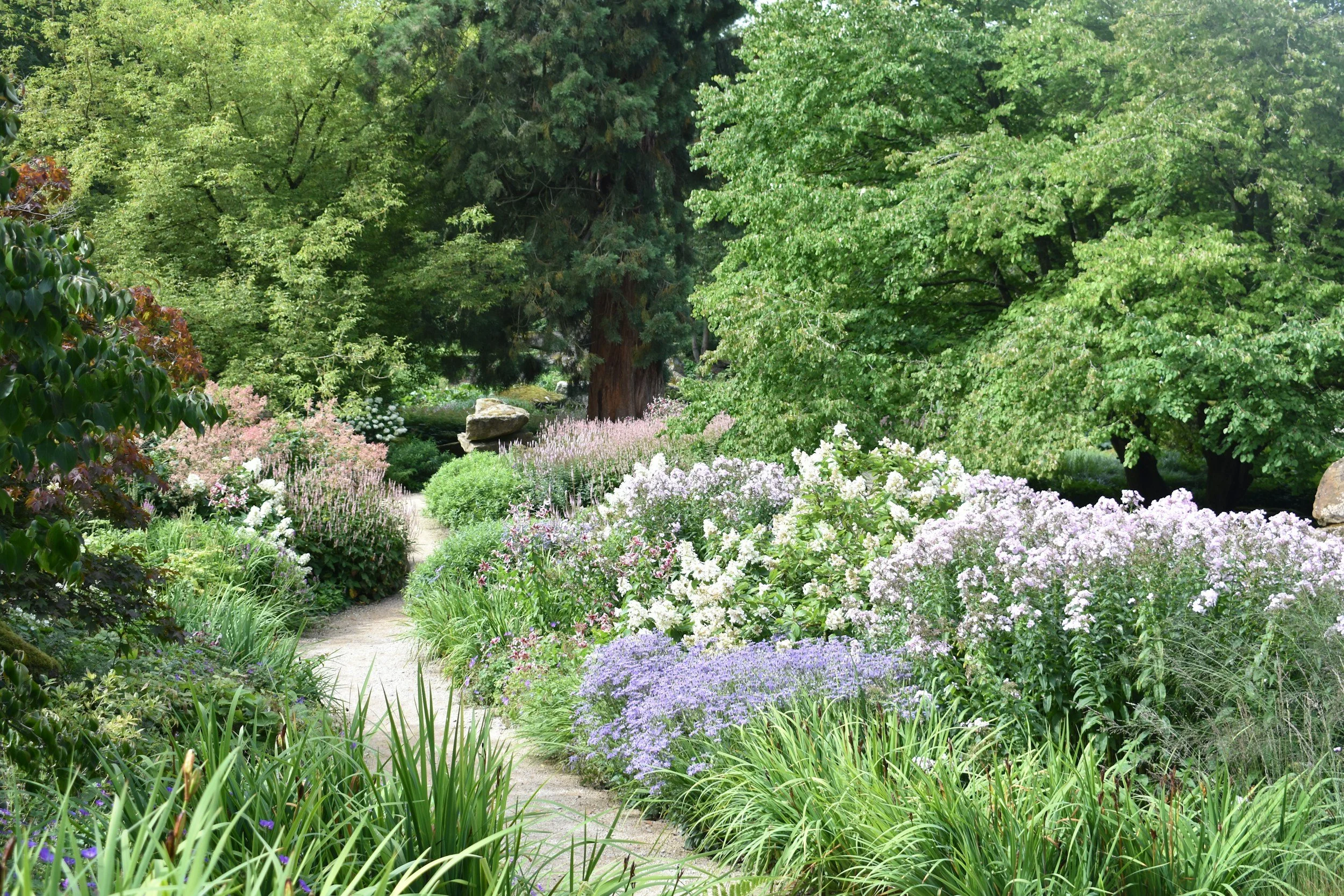
The most cohesive cottage gardens aren't using every colour — they have a dominant palette with one or two accents, and white woven throughout. White flowers act as breathing room between stronger colours and give the whole planting a lifted, luminous quality.
Scale — the most underrated consideration
Before you fall in love with any plant, ask: what will this look like in five years? A Miscanthus grass that looks delicate at the nursery becomes a 1.5m architectural statement. A climbing hydrangea will eventually engulf a fence. Match the scale of your plants to the scale of your space, and read those mature size measurements on the tag as promises, not suggestions.
Light, soil, colour, scale — this is exactly what a planting plan solves.
Our design service takes all of this off your plate. We’ll survey your site, assess your light and soil, understand your goals, and deliver a plan with plant selections chosen specifically for your space. You also get landscaper pricing on your plant order.