

A Zone 6 Gardiner's Companion
Why nine of one plant is always better than one of nine plants. And what structure, froth, and spikes actually mean.
Here is the most important design lesson in this entire guide: repetition creates visual delight. A single nepeta is charming. Nine nepeta planted in a drift is breathtaking. This is why professional garden designers always seem to use 'too much' of any one thing — because they've learned that repetition is what makes a garden feel intentional rather than collected.
When you're at the garden centre, resist the urge to pick one of everything that catches your eye. That approach gives you a botanical collection, not a garden. Instead, ask yourself: if I love this plant, how many can I actually plant?
The Repetition Rule
Instead of planting one Echinacea here and one there, group five or seven together in a loose, natural-looking cluster — a "drift." In nature, plants self-seed and spread in this way. Drifts feel effortless and organic precisely because they mimic how plants actually grow. Odd numbers (3, 5, 7, 9) feel more natural than even numbers. A drift of five Salvia nemorosa will give you an unbroken ribbon of purple that catches the eye from across the garden. One Salvia is just a plant.
Think in drifts, not dots.
Before you load the cartWrite "I need 9 of this" — not "one of this and one of that." When you find a plant you love, commit to it. Buy multiples. Plant them together. Then find two or three other plants to partner with it — again in groups of at least three.
Structure, froth, and spikes — the holy trinity
Every great garden planting has a mix of these three elements. Think of them as the architecture, the atmosphere, and the punctuation of your border.
Structure
The bones. Shrubs, ornamental grasses, bold foliage plants. They hold the garden together when everything else fades.
Examples: Miscanthus, Calamagrostis, Yew, Inkberry Holly (Ilex glabra), Hydrangea paniculata, Sedum 'Autumn Joy'.
Froth
The soft, airy, romantic element. Plants with fine texture that weave between others.
Examples: Nepeta, Gaura, Thalictrum, Gypsophila, Pennisetum, Alchemilla mollis (lady's mantle).
Spikes
The vertical accents. Create rhythm and draw the eye upward.
Examples: Salvia nemorosa, Veronicastrum, Agastache, Liatris, Digitalis (foxglove), Crocosmia.
Fillers
The connective tissue between bolder plants. Low, spreading, or mounding.
Examples: Geranium (hardy), Heuchera, Thymus, Sedum groundcovers, Alyssum.
A well-designed border will have at least three of these four elements working together. A common beginner mistake is a border full of froth with no structure — beautiful in June, but formless and tired by August.
A Structure Plant Worth Knowing: Inkberry Holly
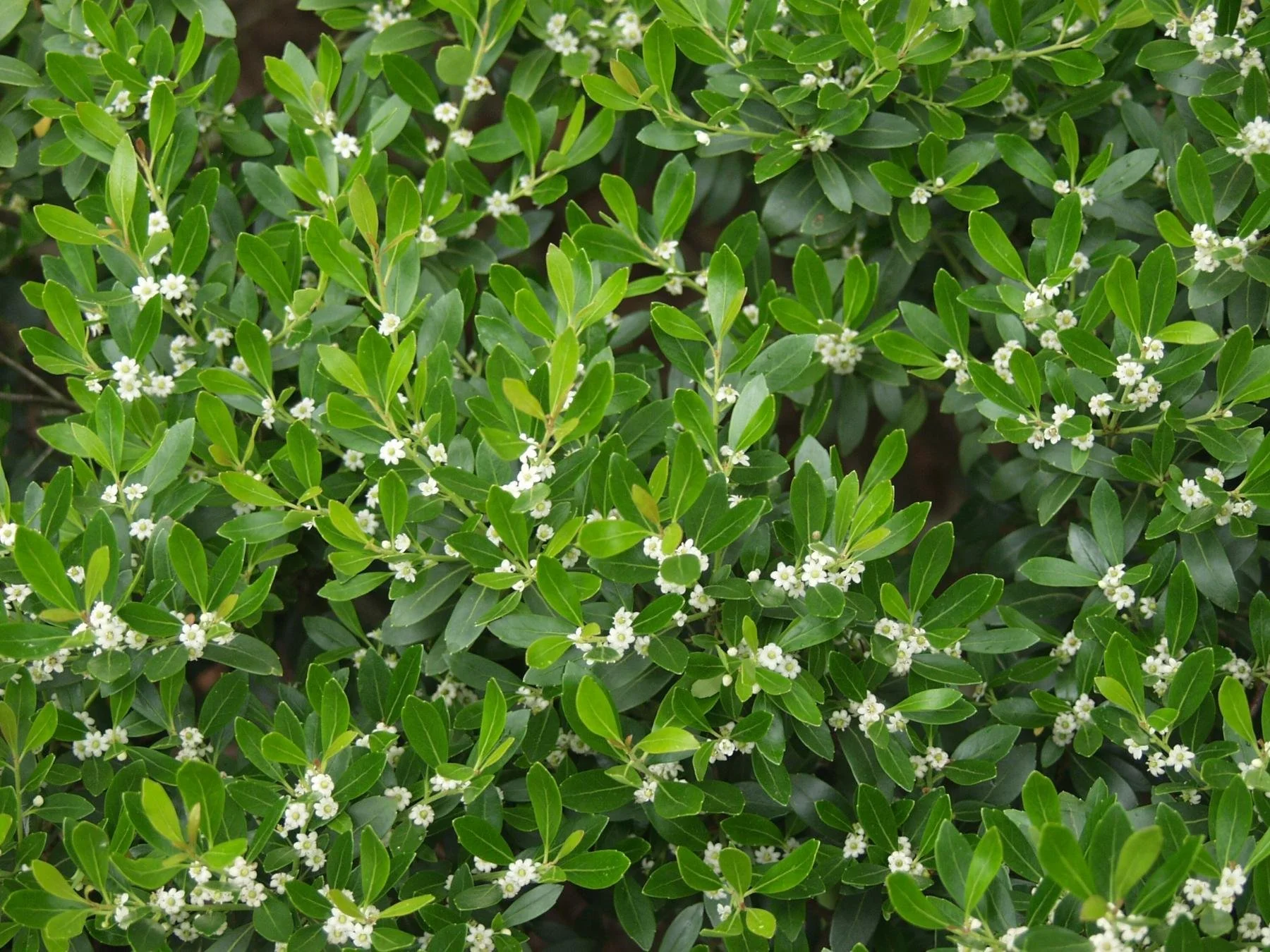
Ilex glabra — and its cultivars like 'Shamrock' and 'Gem Box' — is having a well-deserved moment. It's a cultivar of a North American native, which means it's genuinely adapted to our conditions and enormously valuable for local wildlife. In spring, it produces tiny, delicate white flowers — easy to overlook but beloved by pollinators. By late summer, glossy black berries appear and persist through winter, feeding birds when almost nothing else does. The foliage stays dark green and handsome all season. It tolerates part shade and even poorly drained soil. It doesn't get boxwood blight. It doesn't get the boxwood moth. It just quietly does its job beautifully for decades. If you've been using boxwood for structure, this is the plant you want instead — and the birds will thank you.
A recipe worth knowing
Try this combination as a starting point for a sunny Zone 6 border and build from it:
Structure: 3 × Miscanthus sinensis 'Morning Light' — fine-textured, moves beautifully, winter interest
Spikes: 7 × Salvia nemorosa 'Caradonna' — deep purple-black stems, June–July, reblooms if cut
Froth: 9 × Nepeta 'Walker's Low' — lavender-blue, sprawling, soft — cut back mid-July for a second flush
Filler: 5 × Geranium 'Rozanne' — violet-blue, sprawling, blooms endlessly from June to frost
Late season: 5 × Echinacea purpurea — adds July–September colour when everything else needs a rest
The Pollyanna Wilkinson Effect
The English cottage garden aesthetic works because it looks effortless — and yet every plant has been chosen deliberately for texture, season, and how it relates to its neighbours. The abundance is designed. The "wildness" is orchestrated. You achieve this by knowing your plants deeply before you buy, not by buying widely and hoping.
This guide gives you the vocabulary. A planting plan writes the sentence for your garden.
Knowing about structure, froth, and drifts is one thing. Figuring out which specific plants to use, in what quantities, for your light and soil and zone — that's what a custom planting plan does. We’ll do that thinking for you, down to the variety and the number of each plant.