

A Zone 6 Gardiner's Companion
July is harder than it looks. Plan for the whole growing season from the very start.
The GTA growing calendar
Our season is compressed — roughly May through October — but within those months, very different things are happening. The biggest mistake gardeners make is planning for a garden that looks incredible in one week of June. The goal is a garden that is always interesting, always doing something.
Mid–Late Summer
(July–Sept)
Echinacea
Agastache
Rudbeckia
Phlox paniculata
Crocosmia
Liatris
Joe Pye Weed
Fall
(Sept–Oct)
Sedum/Hylotelephium
Anemone japonica
Asters
Persicaria
Grasses (peak)
Rudbeckia (cont.)
Early Summer
(June–July)
Nepeta (peak)
Salvia (peak)
Hardy Geraniums
Roses
Astilbe
Veronicastrum
Digitalis
Spring
(May–June)
Tulips & Alliums
Hellebores
Nepeta (early)
Salvia nemorosa
Roses (first flush)
Iris
lchemilla mollis
The July problem — and how to solve it
If you've planted a garden heavy on Nepeta and Salvia — classic cottage garden choices — July is going to be a reckoning. By late June, both have usually had their big, gorgeous moment and they're looking tired, flopped, and a little brown around the edges.
Here's what to do and what to add so that July isn't a mystery:
The Chelsea Chop — what it is, and when to do it in the GTA
In England, the Chelsea Flower Show takes place in late May — and the "Chelsea Chop" is the practice of cutting back certain perennials at that time to delay their bloom, extend their season, or encourage a second flush. In the GTA, our timing is a bit different.
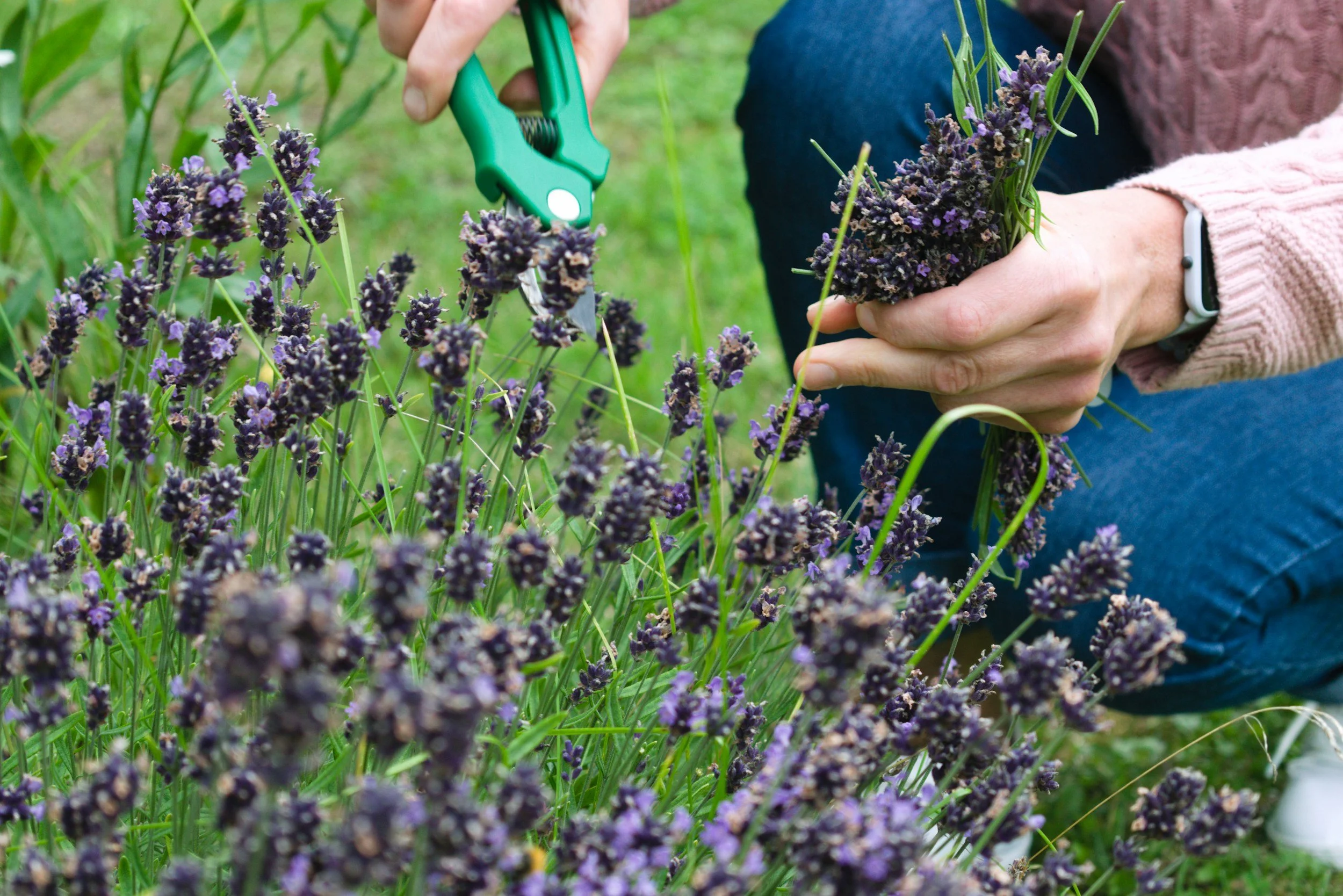
Think of it less as a specific date and more as a response to what you're seeing in your garden. When your Nepeta has bloomed its heart out and is starting to look floppy and spent — usually late June to mid-July here — that's your signal.
How to Do the Chelsea Chop in Zone 6
When: Late June to mid-July, after the first big bloom has faded and plants look tired.
What to cut: Nepeta (catmint), Salvia nemorosa, hardy Geraniums, Alchemilla mollis.
How much: Cut Nepeta back by half to two-thirds — yes, it looks brutal, almost to the ground for some varieties. Salvia can go back by about half. For Geraniums, shear the whole mound back hard.
What happens next: Within three to four weeks, fresh new growth will emerge and you'll often get a second flush of blooms in August and September — sometimes as good as the first. This is the trick that turns a June-only garden into one that looks alive well into fall.
What you don't chop: Echinacea, Rudbeckia, Agastache, Liatris — these are your summer-into-fall bloomers. Leave them to do their thing.
Water after you chopGive anything you've cut back a good deep watering and a handful of slow-release fertilizer if you have it. You've just asked the plant to regenerate from scratch — it deserves a bit of encouragement. In a hot dry July, check on newly-chopped plants every few days.
Plants that carry you through the gap
These are your July–August heroes. If your garden doesn't have a few of each, it will have a lull.
Mid–Late Summer
(July–Sept)
Echinacea
Agastache
Rudbeckia
Phlox paniculata
Crocosmia
Liatris
Joe Pye Weed
Fall
(Sept–Oct)
Sedum/Hylotelephium
Anemone japonica
Asters
Persicaria
Grasses (peak)
Rudbeckia (cont.)
Early Summer
(June–July)
Nepeta (peak)
Salvia (peak)
Hardy Geraniums
Roses
Astilbe
Veronicastrum
Digitalis
Spring
(May–June)
Tulips & Alliums
Hellebores
Nepeta (early)
Salvia nemorosa
Roses (first flush)
Iris
lchemilla mollis
My honest thoughts on Peonies
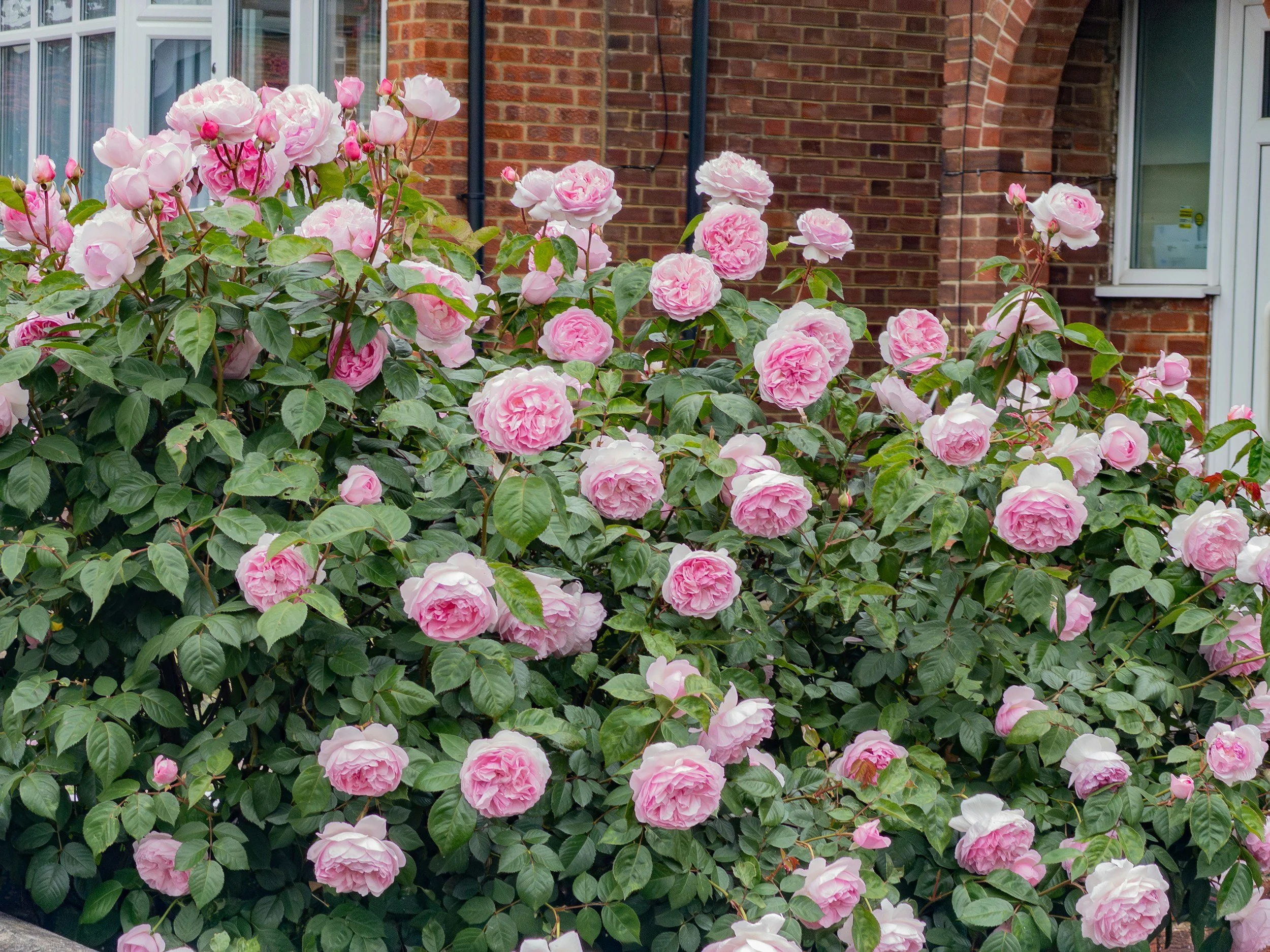
Peonies are beautiful — but they work hard for about two weeks and then spend the rest of summer looking increasingly beleaguered with mould, blight, and floppy stems. In a short growing season like ours, that's a significant portion of prime real estate devoted to a plant that's done by mid-June. If you love them, choose one that is a genuine showstopper and commit — but know what you're signing up for.
The alternative worth knowing
There are peony-like roses — think David Austin varieties such as 'Olivia Rose', 'Princess Alexandra of Kent', or 'Strawberry Hill' — that give you those enormous, frothy, romantic blooms from June through November. They require care too (deadheading, spraying for blackspot if needed, a good feed in spring), but the payoff is months of blooms rather than weeks. In a short season like ours, that math matters.
A Note on Bulbs
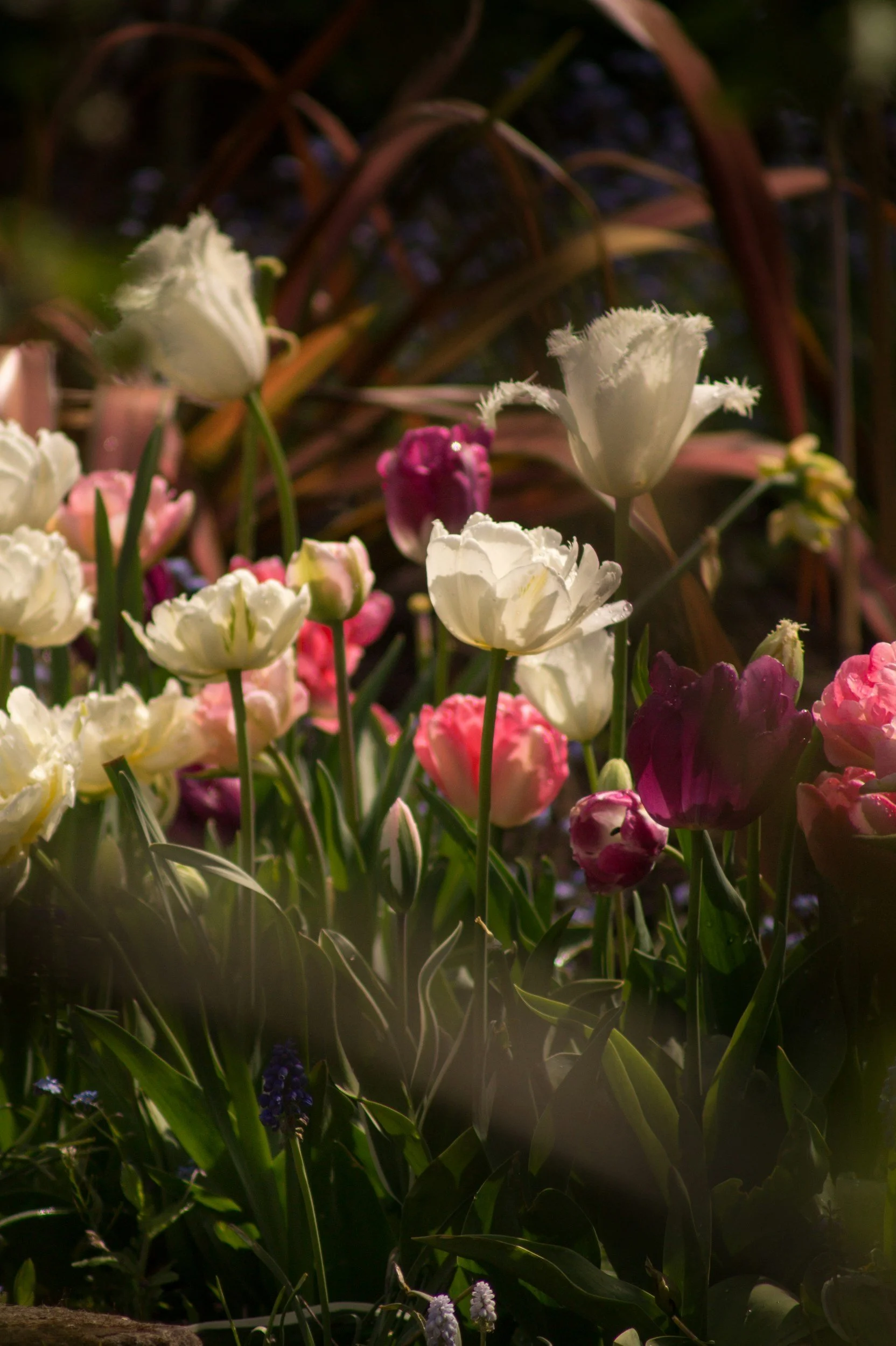
The best way to add spring interest is through bulbs planted in autumn — Tulips, Alliums, Narcissus, and Muscari. Alliums in particular are underrated: their purple globes in May–June coincide beautifully with emerging Nepeta and early Salvia. They also look wonderful as dried seedheads for months after. Plant them in drifts of 15–25 for best effect.
Winter interest — the GTA version
English garden designers will talk a great deal about winter interest: the translucent stems of Verbena bonariensis catching low light, the skeletal architecture of Fennel, the way Teasel looks against a winter sky. And all of that is true — in England, where winter is grey and mild and things actually stay visible.
Here's the reality: in the GTA, a lot of that is going to be crushed under snow for three to four months. If your kids are like mine, they will also get trampled. You don't need to stress about the winter garden in the same way. Focus instead on the big things that will actually be seen above the snowline, and let the rest take care of itself.
Red-stemmed dogwood
Cornus alba 'Sibirica' or 'Elegantissima' — brilliant crimson stems that glow against snow. Plant in multiples for maximum impact. Cut one-third of old stems to the ground each spring to keep the colour vivid.
Evergreens
Yew, cedar, spruce, holly — they carry the garden through winter visually and provide structure the eye can rest on when everything else is white. Even one well-placed evergreen anchors a winter garden.
Multi-stem trees
A multi-stem serviceberry, birch, witch hazel or redbud is an architectural statement in any season, but in winter the branching silhouette is genuinely beautiful. These are worth the investment — they just get better with age.
Ornamental grasses
Miscanthus and Calamagrostis hold their form beautifully through winter, catching snow and frost. They rustle. They glow in low winter light. Leave them until March — they are one of the most effortlessly beautiful things in a winter garden.
The GTA Winter Garden Mindset
Don't stress about winter interest the way you would if you lived in coastal England. Focus on three things that will actually be visible: a structural evergreen or two, some red-stemmed dogwood or colourful bark, and grasses that stand above the snowline. Beyond that, leave your perennial seedheads for the birds, pile on the mulch, and let the garden rest. That's not failure — that's sensible.
And one more thing: leave the ornamental seedheads of Echinacea, Rudbeckia, and Sedum standing through winter. They provide critical habitat for overwintering beneficial insects and seeds for birds, and they genuinely look beautiful against snow. Cut them down in March, not October.
Planning a garden that looks good in every season is genuinely complex.
If you're feeling the weight of all of this — spring bulbs, July gaps, Chelsea chops, winter structure — a consultation with Caitlin is the fastest way to get clarity on your specific garden. One session, your actual space, immediate answers.