

A Zone 6 Gardiner's Companion
Go big or go cluttered. The case for fewer, larger containers — and why less is genuinely more.
The small pot problem
Garden centres are full of beautiful small pots. Terracotta, glazed ceramic, stone-effect, little wire baskets — they're charming, they're affordable, and they will make your garden look cluttered. Every single time.
Here's the truth: a collection of small pots looks like a yard sale. Even if every single pot is beautiful on its own, grouping many small containers creates visual chaos — too many competing shapes, too many soil lines at different heights, nowhere for the eye to rest.
The ruleIf you're going to have pots, go as large as you can afford and carry. One large, well-planted container does more design work than six small ones. It creates a focal point. It allows for a proper mixed planting with height, spillers, and fillers. It looks intentional.
What "going big" actually means
In terms of containers for a GTA garden, think of these tiers:
40–50 cm diameter
BEST USE: Small patio groupings of 2–3 plants, single dramatic specimen
AVOID: Solo as an entrance pot — it'll look lonely
Under 30 cm diameter
BEST USE: Single specimens, herbs on a kitchen windowsill
AVOID: Mixed plantings, front entrances, anything you want to be a focal point
Large troughs & half-barrels
BEST USE: The most satisfying plantings possible. Plant like a mini garden.
60 cm+ diameter
BEST USE: Entrance statements, mixed thriller/filler/spiller combinations, trees
AVOID: Nothing — this is where it starts to sing
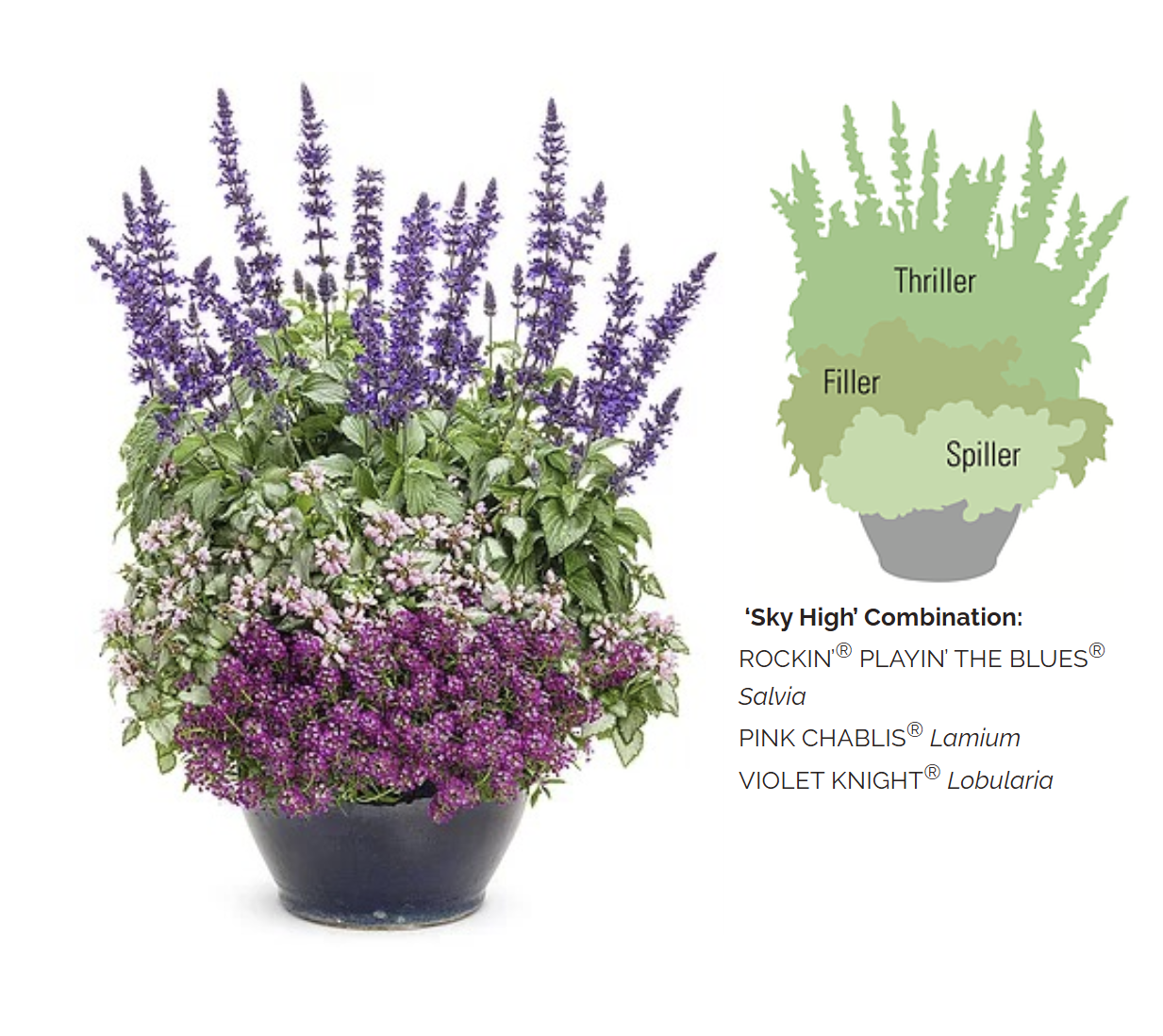
The thriller/filler/spiller formula
For a large mixed container that always looks designed, use this classic formula:
Thriller— the tall, dramatic centrepiece.
Examples: Canna, ornamental grass, Cordyline, tall Salvia, Agastache
Filler— the mid-height, bushy element that fills in the middle.
Examples: Petunia, Heuchera, Nemesia, Calibrachoa
Spiller— something that tumbles over the edge.
Examples: Lobelia trailing, Sweet potato vine, Bacopa, Dichondra 'Silver Falls'
Pots and winter in Zone 6
Most pots outdoors in Zone 6 will freeze solid. A few important things to know:
Terracotta freezes and cracks. It's beautiful, but unless it's guaranteed frost-proof, bring it inside for winter — or accept that it may not survive.
Plants in pots are more vulnerable than plants in the ground because the roots are exposed on all sides to the cold. A plant rated Zone 6 may not survive in a pot through a Zone 6 winter.
Good container choices for Zone 6 winters: Large fibreglass or resin pots (lighter, frost-resistant), glazed ceramic rated frost-proof, heavy-duty plastic. Grouped pots also protect each other somewhat.
The Gaura rule applies here too: decide in advance whether your container plants are annuals. Plant them with full commitment and enjoy them completely.
A container worth trying
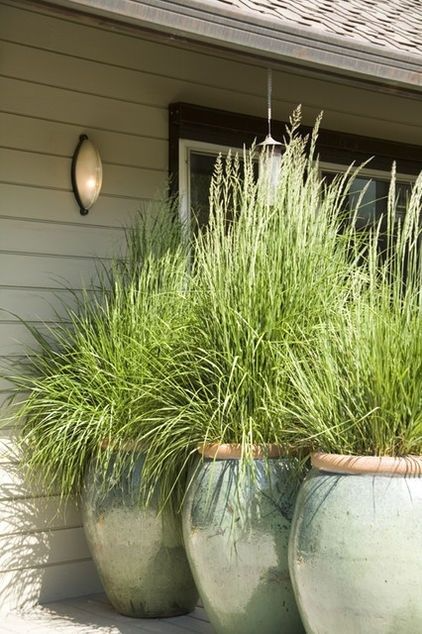
If you are looking for something that will overwinter in a container, I've had good luck with Miscanthus sinesis var. variegatus (Variegated Maiden Grass). Make sure you store it in a sheltered place in the winter and choose a big enough pot to accommodate future root growth.
Fewer pots, more impact
If budget is a concern, the answer is not more small pots — it's fewer large ones. Save up for one genuinely large, beautiful container and plant it well. Place it somewhere it can be a destination. Then stop. You do not need the 22 pots of varying sizes arranged around the back door. You need one or two things that are truly magnificent.